


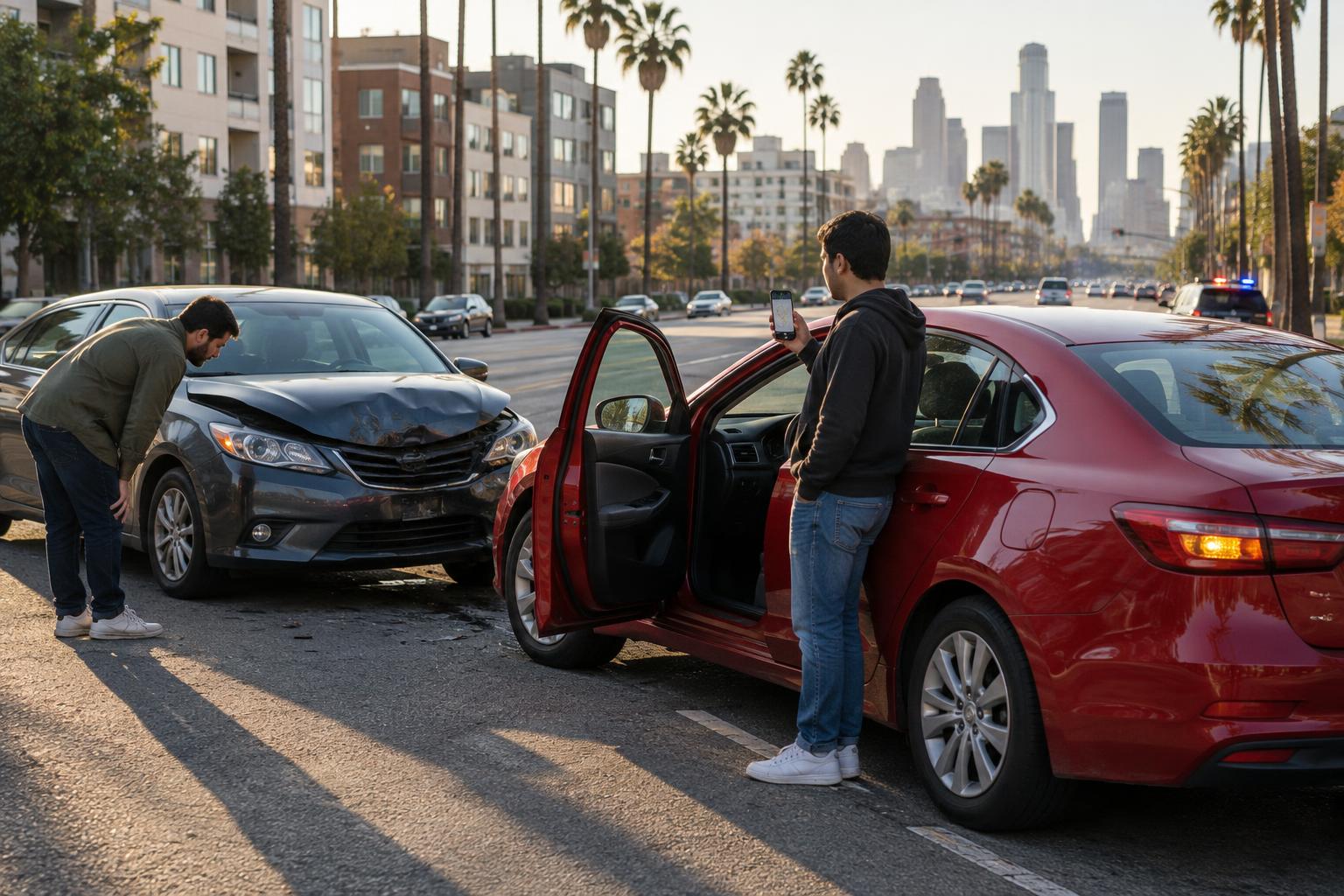
How much insurance coverage applies after a rideshare accident?
If you have been involved in a rideshare accident, you need to know that there may be three layers of coverage depending on the situation. Which layer applies comes down to one thing: what the rideshare driver was doing at the exact moment of the crash. The difference between those layers can be the difference between a million dollars of available coverage and the bare state minimum.
That single fact drives almost every rideshare claim we handle at LA Injury Attorneys, and it is the first thing we look at when someone calls us after being hit by, or riding in, a rideshare vehicle.
Scenario one: the driver was transporting a passenger
The first scenario is when the rideshare driver is in the process of transporting a passenger. Under those circumstances, there is a million dollar coverage for liability, as well as a million dollars of uninsured motorist coverage.
This is the strongest position to be in, and it matters for more people than most passengers realize. It can apply if you were the passenger in the back seat, if you were in another vehicle that the rideshare driver hit, or if you were a pedestrian or cyclist struck during an active trip.
The uninsured motorist piece is easy to overlook and often just as important as the liability piece. If the at-fault party is someone else entirely and that person has no insurance, or not enough of it, that uninsured motorist layer can still be the source of your recovery while a passenger is in the car.
Scenario two: the driver was logged on but had not picked up a passenger
In the second scenario, the rideshare driver is logged on to the app but has not picked up a passenger yet. Under that scenario, the level of coverage drops significantly: to a $50,000 level, with a maximum of $100,000 of coverage available.
This is the period people argue about most, because the driver is technically working but nobody is in the car. A driver who is waiting for a ping, driving toward a pickup, or circling a busy area is in a very different insurance position than a driver who is mid-trip, even though they look identical from the outside.
Proving that the driver was logged on at the time of the crash usually requires app records rather than anything you can see at the scene. That is a documentation fight, and it is one of the reasons rideshare claims are rarely as simple as an ordinary auto accident claim.
Scenario three: the driver was on their own time
In the third scenario, the rideshare driver is operating the vehicle on his own time and gets involved in an accident. In those situations, the coverage is whatever the driver’s personal policy provides, which by law must be at least the California minimum.
Practically speaking, this is a standard auto accident claim against a private driver’s personal policy. The rideshare company’s coverage layers are not in play, because the driver was not working. For a serious injury, minimum limits can be exhausted almost immediately, which makes it critical to identify every other possible source of recovery, including your own uninsured or underinsured motorist coverage.
Why the driver’s status is the whole fight
Because the available coverage changes so dramatically between these three scenarios, the driver’s status at the moment of impact is what the insurance side focuses on. It is common for a claim to be characterized in whichever way produces the smallest pot of money.
Our founder is a former insurance adjuster, so our team knows how these files get evaluated from the inside: what gets documented, what gets disputed, and what an adjuster is looking for when deciding how much a claim is worth. We use that background when we build rideshare accident claims, negotiate with insurers, and pursue the maximum settlement or verdict available.
What to do after a rideshare accident in Los Angeles
- Report the crash and get medical attention, even if you feel functional at the scene.
- Note whether you were a passenger on an active trip, and keep your trip receipt or app history if you have it.
- Photograph the vehicles, the scene, and any visible injuries.
- Get the names and contact information of the drivers and any witnesses.
- Do not give a recorded statement or accept an early offer before you understand which coverage layer applies.
Ride share accidents are one of the core claim types we handle, alongside auto accidents, pedestrian accidents, and catastrophic injury cases across Los Angeles and California.
Frequently asked questions about rideshare accident coverage
How many layers of insurance coverage can apply to a rideshare accident?
There may be three layers of coverage depending on the situation. The highest applies when the driver is actively transporting a passenger. A middle layer applies when the driver is logged on to the app but has not picked up a passenger. The lowest applies when the driver is using the vehicle on their own time, when only state minimum coverage applies.
Does the million dollar policy apply if I was hit by a rideshare driver, not riding in the car?
Yes, it can. When a rideshare driver is in the process of transporting a passenger, there is a million dollar liability coverage available, and liability coverage exists to pay people the driver injures. That can include occupants of other vehicles, pedestrians, and cyclists. LA Injury Attorneys can review the driver’s status at the time of the crash and identify which layer applies.
What if the rideshare driver was waiting for a ride request when the crash happened?
If the driver was logged on to the app but had not picked up a passenger yet, the level of coverage drops well below the million dollar layer. Establishing that the driver was logged on generally requires app and trip records rather than scene evidence, which is why these claims benefit from prompt investigation.
Do I pay anything to have my rideshare accident claim reviewed?
No. LA Injury Attorneys offers a free consultation so you can discuss your claim in detail with a skilled and compassionate attorney, and there are no fees unless we win. Our team is available 24/7 to answer your questions and provide peace of mind during this difficult time.
Talk to a Los Angeles rideshare accident attorney
If you were injured in a rideshare crash anywhere in Los Angeles, Burbank, North Hollywood, El Segundo, or elsewhere in California, find out which layer of coverage applies to your case before you deal with an insurer. Schedule A Free Consultation.
Disclaimer: This article is provided for general informational purposes only and should not be considered legal advice. Every personal injury case is unique, and the laws that apply may vary depending on the specific facts. Reading this article does not create an attorney-client relationship. If you have questions about your legal rights or deadlines, consult a qualified California attorney regarding your particular situation.