



Parents send their children to school expecting them to learn in an environment where reasonable precautions are taken to protect their safety. Yet injuries can happen in classrooms, playgrounds, gymnasiums, athletic fields, cafeterias, hallways, parking areas, and during school-sponsored activities. When a student is seriously injured, one of the first questions a parent may have is whether the school or someone else can be held legally responsible.
In California, determining liability for a school injury is not always straightforward. The answer depends on how the injury occurred, who was responsible for supervising the student, whether a dangerous condition contributed to the accident, and whether the school involved is public or private. Claims involving public schools can be particularly complicated because special rules and deadlines may apply when pursuing compensation from a government entity.
Understanding these basic principles can help families recognize when an ordinary childhood accident may instead involve negligence. If your child has suffered a significant injury because of potentially unsafe conditions or inadequate supervision, speaking with a California injury attorney can help you understand the options available to your family.
When Can a California School Be Liable for a Student’s Injury?
A school is not automatically responsible every time a student gets hurt. Children run, play sports, participate in physical education, and engage in activities where some possibility of injury naturally exists. The fact that an accident happened on school property does not, by itself, establish negligence.
Liability generally becomes an issue when the injury may have resulted from a failure to use reasonable care. Depending on the circumstances, that could involve inadequate supervision, dangerous property conditions, improperly maintained equipment, negligent conduct by an employee, or another preventable safety problem.
California law recognizes responsibilities relating to student supervision. Education Code section 44807, for example, addresses the responsibility of teachers in public schools to hold students to a strict account for their conduct on the way to and from school, on playgrounds, and during recess. The precise legal analysis, however, depends heavily on the facts surrounding the accident.
A key question is often whether reasonable precautions could have prevented the injury. Schools are not insurers of every student’s safety, but they are expected to exercise appropriate care under the circumstances.
Inadequate Supervision Can Lead to School Injury Claims
Supervision is one of the most important issues in many school injury cases. Students, particularly younger children, may not fully appreciate dangerous situations or recognize the consequences of risky behavior. Teachers, coaches, aides, administrators, and other school personnel therefore play an important role in maintaining a reasonably safe environment.
A lack of adequate supervision may become relevant when students are left unsupervised during an activity that requires monitoring, when dangerous behavior continues despite staff members having an opportunity to intervene, or when students are permitted to use equipment without appropriate oversight.
Consider a situation in which students are engaging in dangerous conduct on a playground while the responsible staff member is not paying attention. If a child suffers a serious injury, the question may not simply be whether another student caused the accident. An investigation may also examine whether appropriate supervision could reasonably have prevented the incident.
The age of the children, type of activity, number of students, location, prior incidents, and knowledge of school personnel can all influence the liability analysis. Because no two accidents are identical, supervision cases generally require careful examination of what happened immediately before the injury.
Dangerous Conditions on School Property May Create Liability
Some student injuries have little to do with supervision and more to do with the physical condition of the school itself. School campuses contain playground structures, stairways, sports facilities, sidewalks, classrooms, electrical equipment, gates, fences, bleachers, and many other areas where unsafe conditions can potentially cause injuries.
For example, a student might be injured because of broken playground equipment, a damaged stairway, an unsafe walking surface, or another hazardous property condition. Whether liability exists will depend on the circumstances, including the nature of the hazard and the legal standards applicable to the property owner or public entity.
An important question in these cases is often whether the responsible party knew, or under the applicable legal standard should have known, about the dangerous condition and had an appropriate opportunity to address it. Maintenance records, prior complaints, photographs, inspection records, witness statements, and earlier incidents may therefore become important evidence.
Parents should avoid assuming that an injury caused by school equipment was simply an unavoidable accident. When equipment fails, a structure is poorly maintained, or an obvious hazard remains uncorrected, further investigation may be warranted.
Who Could Be Responsible for a School Injury?
The potentially responsible party is not necessarily the individual who was physically closest to the student when the accident happened. Depending on the circumstances, responsibility could involve a school district, private school, school employee, contractor, property owner, equipment manufacturer, transportation provider, or another third party.
For public schools, California’s laws governing public entities are especially important. Government Code section 815.2 generally provides for public-entity liability for certain injuries caused by an employee’s acts or omissions within the scope of employment, subject to statutory requirements, defenses, and exceptions. This does not mean that every negligent act by a school employee automatically results in school district liability. It does mean that identifying who was acting, in what capacity, and for whom can be essential to evaluating a claim.
Third-party responsibility is also important. Suppose, for example, that a school hires an outside company to perform maintenance and negligent work creates a dangerous condition. Alternatively, defective sports or playground equipment could potentially raise questions about parties involved in designing, manufacturing, distributing, installing, or maintaining that equipment.
A thorough investigation should therefore look beyond the immediate accident. Identifying every potentially responsible party can be particularly important when a child has sustained a serious or long-term injury.
What If Another Student Caused the Injury?
School injury cases sometimes arise from the conduct of another student. These incidents can range from ordinary playground accidents to physical assaults or repeated bullying that results in injury.
When another student directly causes an injury, questions may arise about what school employees knew before the incident and whether reasonable steps were taken in response. If administrators or staff members were aware of recurring dangerous behavior, threats, or previous similar incidents, those facts may be relevant when evaluating whether the injury could reasonably have been prevented.
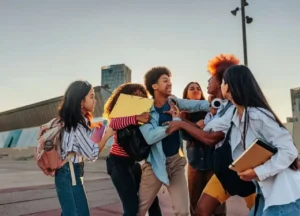
This does not mean that a school is automatically liable whenever one student hurts another. Schools cannot anticipate every spontaneous act. The issue generally requires a closer look at foreseeability, supervision, previous warning signs, the school’s response, and the circumstances surrounding the incident.
Parents dealing with a serious injury should document what their child reports and preserve communications with teachers and administrators. Emails, incident reports, disciplinary communications, and other records can become important if questions later arise regarding what the school knew.
Sports and Physical Education Injuries Can Be More Complicated
Athletics naturally involve some risk. A student participating in football, basketball, soccer, wrestling, gymnastics, or another physical activity may suffer an injury even when everyone involved has acted responsibly.
For that reason, the fact that a student was hurt while playing a sport does not necessarily establish a negligence claim. The analysis may be different, however, when an injury involves unsafe equipment, inappropriate supervision, dangerous facilities, conduct beyond the ordinary risks of the activity, or other potentially negligent circumstances.
Coaches and school personnel responsible for athletic activities must make safety decisions in real time, and the legal standards applicable to sports injuries can involve additional considerations. Waivers, assumption-of-risk principles, and the specific circumstances of the activity can also affect a potential claim.
Families should therefore avoid drawing conclusions based solely on the fact that an injury happened during sports. A careful factual and legal review may be needed to distinguish an inherent risk of athletic participation from an injury potentially caused or worsened by negligence.
Public School Injury Claims Have Special Rules and Deadlines
One of the most important distinctions in California school injury cases is whether the student attends a public or private school. Public school districts are generally governmental entities, which means claims against them can be subject to California’s Government Claims Act.
This distinction matters because a person seeking damages from a public entity may need to present a government claim before pursuing a lawsuit. For many claims involving injury to a person, California Government Code section 911.2 generally requires presentation of the claim within six months after the cause of action accrues, although exceptions and additional rules can apply.

That deadline can be substantially shorter than the time people commonly associate with ordinary California personal injury lawsuits. There are also procedures governing late claims and other circumstances, but families should not assume an exception will apply.
This is one reason prompt legal advice can be particularly important after a serious public school injury. Waiting while the school conducts an internal investigation or while insurance issues are discussed does not necessarily protect a family’s legal rights or extend an applicable statutory deadline.
Private School Injury Claims May Follow Different Rules
Private schools generally are not treated in exactly the same manner as public school districts for purposes of government claim procedures. A negligence claim against a private school may instead involve principles similar to those applied to other private organizations or property owners.
That does not necessarily make a private school case simple. Questions can still arise regarding supervision, premises safety, employee conduct, waivers, contractors, insurance coverage, and the student’s participation in specific activities.
Private schools may also have their own incident procedures, enrollment agreements, releases, and insurance arrangements. Those documents should be reviewed carefully rather than assuming they completely determine whether a family has a valid claim.
Because the legal process can differ significantly depending on whether the institution is public, private, charter, or operating through another organizational structure, accurately identifying the responsible entity is an important early step.
What Compensation May Be Available After a Serious School Injury?
When a school injury results from legally actionable negligence, compensation may potentially address losses associated with the child’s injuries. The particular damages available depend on the circumstances and applicable California law.
Medical expenses are often a central concern. A significant injury may require emergency treatment, hospitalization, surgery, rehabilitation, physical therapy, specialist care, medication, or future medical treatment. The long-term consequences become particularly important when an injury affects the child’s mobility, development, education, or ability to participate in normal activities.
Non-economic harm may also be relevant in an appropriate personal injury case, including the physical pain and emotional effects associated with a serious injury. The nature and extent of recoverable damages will depend on the facts, the responsible parties, applicable statutes, and other legal considerations.
Families should be cautious about evaluating a serious injury based only on the initial medical bill. Some injuries have consequences that become clearer over time, which is why understanding the child’s diagnosis and anticipated future care can be important before resolving a claim.
What Should Parents Do After Their Child Is Injured at School?
The child’s medical needs should come first. Even if an injury initially appears manageable, parents should seek appropriate medical attention when the circumstances warrant it and follow the recommendations of qualified healthcare professionals.
Parents should also obtain information about how the accident happened. Requesting the school’s incident report, identifying witnesses, preserving photographs, keeping relevant emails or messages, and documenting communications can help establish an accurate timeline. If clothing, footwear, or other physical items are relevant to the accident, preserving them may also be appropriate.
It is also helpful to keep records of medical treatment, expenses, missed activities, and other consequences of the injury. Memories fade, staff members change positions, surveillance footage may not be retained indefinitely, and physical conditions can be repaired after an accident.
For significant injuries, consulting an attorney promptly can help families understand what evidence should be preserved and what deadlines may apply. This is particularly important when a public school district or another government entity may be involved.
Speak With a California Injury Attorney About a School Injury
When a child suffers a serious injury at school, parents may be dealing with medical appointments, school absences, emotional distress, and uncertainty about what happened. They should not also have to guess about California’s liability rules or whether an important legal deadline is approaching.
LA Injury Attorneys can evaluate the circumstances surrounding a student’s injury and explain the legal options that may be available. Whether the incident involved inadequate supervision, unsafe school property, a school employee, a contractor, or another potentially responsible party, understanding the cause of the injury is an important first step.
If your child was injured at a school in Los Angeles or elsewhere in California and you believe negligence may have contributed, contact LA Injury Attorneys for a free consultation. Our team can review the circumstances and help you understand the next steps. You don’t pay unless you win.
Disclaimer: This article is provided for general informational purposes only and does not constitute legal advice. Reading this article does not create an attorney-client relationship. California laws, deadlines, exceptions, and legal procedures can vary depending on the specific facts of a case and may change over time. If you have questions about a student injury or potential claim, consult a qualified California attorney regarding your particular circumstances.