


Can You Make Police Test the Other Driver for Drugs or Alcohol?
It is one of the most common questions we hear after a crash: “Can I ask the officer to test the other driver?” The short answer is that you cannot force it. The decision to conduct a field sobriety test belongs to the responding officer, not to you.
But that is not the end of the story, and it is not a reason to stay quiet. What you say and what you document at the scene can be exactly what prompts an officer to investigate impairment. Here is how to handle those first critical minutes.
Step One: Call 911 Right Away
If you have been involved in an accident and you suspect the other driver is under the influence, call 911 immediately. Do not agree to “handle it between ourselves,” and do not let the other driver talk you out of involving law enforcement.
Calling 911 puts the situation on record and brings an officer to the scene while any signs of impairment are still observable. Impairment does not wait around. The longer the gap between the crash and the moment police arrive, the harder it becomes for anyone to assess the other driver’s condition.
Step Two: Gather Evidence While You Wait
The time between your 911 call and the officer’s arrival is valuable. Use it. While you wait for police to arrive, gather as much evidence as you safely can.
Take copious notes
Write down what you observed, in your own words, as close to the moment as possible. Memory fades and details blur, especially after the shock of a collision. Notes made at the scene are far more reliable than a recollection weeks later.
Take photographs and video
Photograph the vehicles, the damage, the positions of the cars, the roadway, and anything else that helps show what happened. Video can capture things a still photo cannot, including how the other driver is moving, speaking, or behaving.
Lock down potential witnesses
Witnesses scatter fast. People stop, look, and then continue on with their day. If someone saw the crash or saw the other driver before or after it, get their name and contact information before they leave. An independent witness who noticed the same warning signs you did can be enormously important later.
Step Three: Tell the Officer Exactly What You Saw
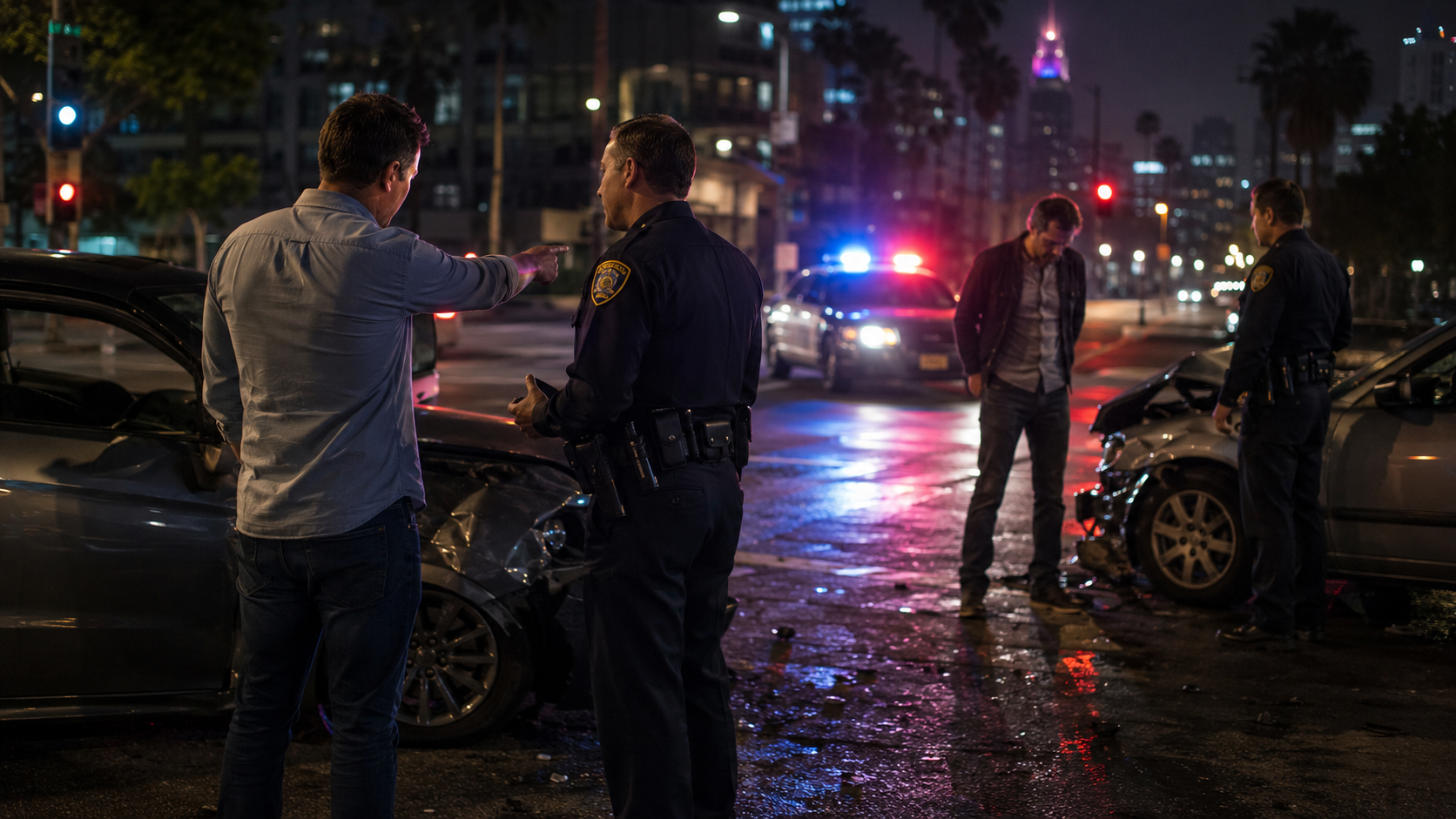
You cannot make a police officer test the other driver. What you can do is give that officer specific, factual information about what you observed.
Be concrete. Instead of saying “I think he’s drunk,” describe the actual signs:
- Slurred speech. Did the driver’s words run together or sound thick?
- The smell of alcohol. Did you notice it on the driver’s breath or coming from the vehicle?
- Unstable movements. Was the driver swaying, stumbling, leaning on the car, or having trouble standing?
Any of these details matter. Officers make decisions based on observable indicators, and your account may be the piece of information that leads the officer to conduct a field sobriety test.
Stick to what you actually perceived. You are not diagnosing anyone or making a legal conclusion. You are reporting facts: what you saw, what you heard, what you smelled. That is what carries weight.
Why This Matters So Much for Your Claim Later
Everything you document at the scene can be huge for your case later on. Impairment is often a central issue in a personal injury claim, and evidence of it can meaningfully change how a claim is evaluated and negotiated.
But evidence that never gets recorded is evidence that effectively does not exist. If nobody mentioned the slurred speech, if nobody photographed the scene, if the only witness drove off without leaving a name, that information is gone. Reconstructing it after the fact is far harder than capturing it in the moment.
That is why the habit of speaking up matters. Telling the officer clearly and specifically what you observed creates a record. Your notes, your photos, your videos, and your witness list create a record. Those records are what a claim gets built on.
Extra Caution Around the Holidays
The holiday season brings more parties, more celebrations, and more people driving home afterward. That combination raises the risk on the road for everyone, including drivers who did nothing wrong.
Knowing your rights before you need them is the point. If the worst happens, you will already know to call 911, to document everything, and to describe what you observed to the responding officer rather than assuming someone else will notice.
Frequently Asked Questions
Can I refuse to let the other driver leave until police test them?
No. You cannot detain another driver or compel a test. Your role is to call 911, stay safe, document what you can, and report your observations to the responding officer.
What if the officer does not conduct a sobriety test?
The officer makes that call. Even if no test happens, your notes, photos, video, and witness information remain valuable and can still be used to support your claim.
What should I write down at the scene?
Record what you saw, heard, and smelled, along with the time, the location, road conditions, vehicle damage, and the names and contact details of any witnesses.
What if I was too shaken up to document anything?
That is common and understandable. Speak with an attorney about what evidence may still be available, including police reports, witness accounts, and other records.
Talk to LA Injury Attorneys
If you were hit by a driver you believe was impaired, you do not have to sort out the evidence on your own. LA Injury Attorneys handles personal injury claims throughout Los Angeles and California, and our founder is a former insurance adjuster who understands how insurers evaluate these cases from the inside.
We offer a free consultation to discuss your claim in detail, and we are available 24 hours a day, 7 days a week to answer your questions. Always speak up and stay safe out there.
Disclaimer: This article is provided for general informational purposes only and should not be considered legal advice. Every personal injury case is unique, and the laws that apply may vary depending on the specific facts. Reading this article does not create an attorney-client relationship. If you have questions about your legal rights or deadlines, consult a qualified California attorney regarding your particular situation.